As May recedes we give you some short reviews of albums that have passed through the Liminal space in the last few weeks. Reviews by Joseph Burnett (JB), Rich Hughes (RH), Scott McMillan (SM) and Matt Poacher (MP).
Black Eagle Child – Go Around, Again (Under the Spire)
For Michael Jantz’s latest release as Black Eagle Child, he’s spread his wings and looked to broaden the influences, textures and environments in his recordings. There’s an amber glow to opener ‘Liquid Acoustic Cyclinder’ with its choppy rhythms, floating electronic noises and nylon stringed contours, and you’re taken on an electro-acoustic trip through the upper atmosphere, glancing down at beautiful landscapes that hypnotise you with their simple repeating patterns. ‘Running Around the Room’ brings you gently back to ground, but replaces the aerial view with a kaleidoscopic dizziness, its repetitious rhythm ingrains itself, gradually pulling the listener into an increasingly typhoon-like swirl. A spirited and youthful sound prevails throughout and it feels inherently optimistic – Jantz has embraced a more “popular” sound, perhaps, but this has brightened his work and made it not just accessible but more evocative as well. (RH)
Bo Ningen with Damo Suzuki – Foreign Affair Confidential (So I Buried)
The tradition of Japanese psychedelia has long embraced noise as a way of attaining ever greater heights, and Bo Ningen are no different from peers such as Acid Mothers Temple or Les Rallizes Denudes. Foreign Affair Confidential, recorded live in Bo Ningen’s adopted home of London, explodes out of the speakers with a crash of unrelenting percussion, an open-ended and saturated guitar solo. Surrounded but not subsumed by this onslaught, is the haphazard caterwauling of one of rock’s most iconic singers – former Can frontman Damo Suzuki. The three tracks that make up Foreign Affair Confidential all present the same formula: Bo Ningen vomit out harsh repetitive blasts of brutal rock while Suzuki gibbers, shouts and mutters staccato words, his vocalising landing somewhere between the vocalising of a Phil Minton and a weird form of spittle-soaked rap. The music is ferociously unhinged, Bo Ningen not so much playing music as launching themselves at some vague common notion of melody, which promptly collapses under such an approach. Hints of Oneida lend proceedings a dreamy psych vibe, but with such violence this is more like Fugazi on acid, with a wild forest sprite randomly, but wisely, handed the vocal duties. Mad stuff. (JB)
Chicago Underground Duo – Age of Energy (Northern Spy)
2012 marks the 15 year anniversary of Rob Mazurek and Chad Taylor’s various partnerships and collaborations. As members of the fertile Chicago jazz and improv scene, they have been involved in countless iterations of the expanding/contracting Chicago Underground set and beyond, including the Exploding Star Orchestra, and touring with a variety of bands (Taylor most recently with Marc Ribot’s band). Age of Energy is a very abstract and spacious record – especially when compared to the driving wallop of their last studio release Boca Negra. The duo make a good deal of use of extended synth and muted oscillator experiments, with long sections of ‘Wind and the Sweeping Pines’ (a 20-minute track) and the whole of ‘It’s Alright’ like long-distance observations of Herbie Hancock’s Mwandishi period. The latter has some of Manzarek’s trademark treated cornet smears, which waver and tremble like Miles at his most enervated. ‘Castle In Your Heart’ is a lush and hushed ballad, featuring little more than a buried, rattling snare, a sweet mbira line and Manzarek’s muted horn, sounding as if it’s piped in from another room. ‘Age of Energy’ is more raucous, with Taylor kicking up a storm, over which Manzarek whirls some oddly dental oscillator squalls and treated descending cornet lines. I guess Age of Energy isn’t exactly a coherent listen, but that misses the point – it’s engaging and unusual and well worthy of your attention. (MP)
Death Grips – The Money Store (Epic)
Hip-hop has long been a genre I struggle with, given the constant homophobia, misogyny and consumerism many of the genre’s most popular artists seem to indulge in. Listening to a 50 Cent or an Eminem, the socially-resonant edge of Nas’s Illmatic or Dead Prez’s Let’s Get Free seem many light years away, and rap’s potency as a genre capable of defying the status quo sometimes feels irreparably eroded. Even the initial flash of grime seems to have made way for pale imitations of the initial movement: grime for shopping malls. So The Money Store comes as a welcome relief, and one that’s all the more unexpected in that it comes on a major label. It would appear that, as the hip-hop underground of Odd Future and Lil B has exploded via the internet, major labels are unsure of where the next big thing will come from, so are just casting nets left and right in the hope of snaring a hit, even if it means exposing themselves to something the suits may find seriously unpalatable. Because this album is one mean, sweaty and belligerent beast. Formed of two producers, Zach Hill and Andy Morin, who also play live drums and synths on tour, and fronted by MC Stefan Burnett, Death Grips produce a kind of tightly-coiled rap-rock that kicks Rage Against the Machine’s bland synthesis of the two into the dust by being leaner, angrier and more minimalist. Burnett’s lyrics seethe with political and social angst, while the synth-heavy melodies and brittle beats lock into menacing grooves somewhere between more traditional rap and the icy industrial punk of Cabaret Voltaire’s early days. Sequencers and sound effects also throw melodic curveballs as Hill and Morin channel house, rock and even dubstep’s muscular repetition, giving Burnett more room to chuck his lyrics at the listener. Hip-hop has rarely felt this immediate of late, so I can definitely see where the hype is coming from. (JB)

Leverton Fox – Human Arm (Not Applicable)
The dialogue between acoustic and electronic instrumentation in an improvised setting can at times be hard to parse: the barrier between analogue and digital, the natural and the synthetic can be so high as to leave it feeling like you are listening to two entirely different tongues, one of which is completely alien to the other. The title of Leverton Fox’s new album Human Arm may be obliquely suggestive of something chimeric – or even cyborgian – but in fact this is a successful, near seamless, merging of the forms. New recruit Sam Britton (a member of duo Icarus) is responsible for rendering everything somewhat extraterrestrial – rarely, if ever, are the percussion of Tim Giles and the trumpet of Alex Bonney heard untreated. As a result, as tracks builds to bursts of savage static or drops down to an eerie whine, it can be hard to pin down the source of the sound. Was that a breathy whisper through the trumpet being blown up into a hostile swirl of wind? And are those drum slaps being given huge electro-dub echo? There is a real sense on Human Arm that the participants are leaving any individual ego behind to become completely absorbed into a monstrous collective. As a result, it makes for an out of this world sonic experience. (SM)
Heatsick – Déviation (Pan)
The latest 12″ release from the twisted genius that is Steve Warwick, aka Heatsick, continues his intereperation of house music through a variety of tinted spectacles. Whether it’s through the lazy dub vibe of ‘C’était un rendez-vous’ with its slow beats revolving around a vocal that recalls sun-kissed days in carefree abandon, or the upbeat Casio rhythms of ‘Stars Down To Earth’, where a sampled female groan weaves over undulating synth chords, it always works. Warwick’s Casio-House starting point underpins everything, but you’re never really sure what influences the next track will blend into the mix. This shifting approach keeps things fresh and ensures that, at the moment, each Heatsick release is an essential listen. (RH)
Ingenting Kollktiva – Fragments of Night (Invisible Birds)
Ingenting Kollktiva are a quartet formed as a homage to the films of Ingmar Bergman and Sven Nyqvist, and Fragments of Light is inspired by recordings made in 1969, including Bitches Brew and Vashti Bunyan’s Just Another Diamond Day to name but two. But those expecting a straightforward appreciation might be left a little puzzled. Each side takes you on a sonic journey. Side A begins with you emerging from the womb through a dark throb of blood pumping drones, before moving through electro-acoustic shudders and metallic clicks spinning through the stereo field. The flipside acts as a more menacing soundtrack to a trip. Coughing and jarring strings see-saw before an electric guitar, made to sound like an actual saw, buzzes through. It finishes with bird song and the softness of the great outdoors, as if you’ve finally been granted some blessed relief from this intense exploration. (RH)

Joe McPhee and Eli Keszler – Ithaca (8mm)
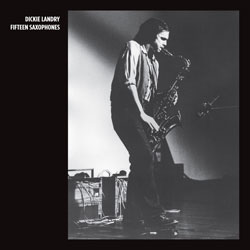
At first glance, it is hard to see where the common waters could possibly be between these two. The saxophonist Joe McPhee is a 72 year old veteran of 1970s socially conscious free jazz. The work of the twenty-something percussionist Eli Keszler is found as often in the gallery as on record, in the form of installations and sound art. But McPhee continues to square up to the most free thinking of percussionists, from Steve Noble to Chris Corsano, and Keszler, with his hyperactive playing technique and use of automated instrumentation feels like the most inventive percussionist out there right now. McPhee is a student of Pauline Oliveros’s Deep Listening techniques, and he needs all the deep listening he can get to enable him to respond to the barrage of sounds Keszler throws his way, from bowed and scraped metal to seemingly impossibly intricate meshes of clicks and clacks. Keszler is an absolute revelation here, responding intuitively to changes in tone and tempo by rummaging in his toolbox (and at times it sounds like he is literally rummaging in a toolbox) for suitable responses. So tight together are they that Keszler’s contributions cling like a flotilla of debris to the bobbing waves of McPhee’s saxophone lines. Ithaca is the duo record of the year by a number of leagues. (SM)

Stephen O’Malley and Steve Noble – St Francis Duo (Bo’Weavil)
The St Francis Duo double LP set comprises the two shows (and four sets) that Stephen O’Malley and Steve Noble played together at London’s Café Oto in August 2010. I was there for the first of these dates, and was surprised at how the typical improv-drone impulse to get louder and louder and louder was completely subverted in their initial exchange. Noble purposefully seeded a storm, the thunder of his percussive rolls amongst the lightning flashes of O’Malley’s guitar, but from there the clouds began to part to reveal, well, a no less black sky behind. The levels dropped, with long spaces filled by no more than guitar hum and the squeak of bowed cymbal. Not exactly what you’d expect from that noted volume-worshipper O’Malley. On the evidence herein, the second night was structured somewhat more conventionally, fragments of white hot metal guitar being welded into a complex percussive framework. But we knew they could generate heat and light; the real creative energy here is in the tension, not the release. (SM)

Pedestrian Deposit – Kithless (Arbor)
I finally watched the film adaptation of Cormac McCarthy’s The Road this week, and on the same day listened to the new LP by the duo Pedestrian Deposit, Kithless, for the first time. I didn’t sleep well that night. The landscapes of Kithless have a similar charred, wind-scarred, and desolate feel to them as those in The Road: it begins with electronics roaring like a burning farmhouse, a cello squealing like warping metal. But the similarity goes further: death combs the grooves of this record, much as it stalks the protagonists in the film. It culminates in a haunting coda of field recordings – the splash of water, some sort of cleansing perhaps, but it is combined with human breath, breath which breaks and shakes, gasping with what sounds like grief. It feels like an intrusion on a private, and very final, ritual. There is another Pedestrian Deposit album due later this year on PAN. I’ll be sure to check that one out, if I’ve recovered from this uneasiest of listening experiences by then. (SM)
Sons of Noel & Adrian – Knots (One Inch Badge)
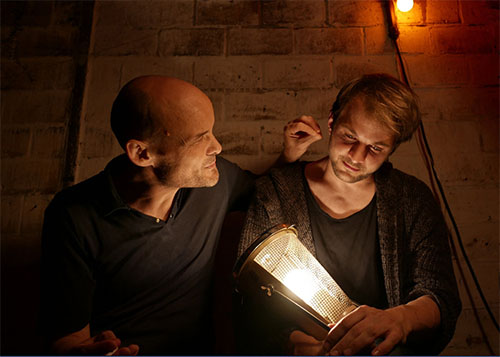
Sons of Noel & Adrian distance themselves from the cheaper end of contemporary folk by virtue of focusing on the less obvious side of traditional music. This mainly revolves around the tremulous baritone of vocalist Jacob Richardson who sounds decades older than he really is. The music that accompanies it is a rich and rustic blend of guitars, violins and ukeleles, augmented by soaring female vocal harmonies and swelling brass riffs. There’s certainly a broad range of musical styles being combined here; from Nick Drake’s quiet simplicity to the dense and sprawling noise of the Dirty Three. Songs like ‘Cathy Come Home’ could easily be written by The Unthanks with their gritty realism and dark tones, while ‘Matthew’ flips this with a more regal brass section and sparkling guitars. But they’re all linked by that voice, one that transcends the music and gives the band their own, unique, sound. (RH)

Steinbruchel and Cory Allen – Seam (Quiet Design)
The title alludes not just to the construction process – that of swapping files and sewing fragments together, but also to the structure of the record, with short interstitial sections of near silence acting as audio stitching to bind the record into a whole. Such fine details are unsurprising when dealing with the work of Cory Allen and Ralph Steinbruchel, both fastidious explorers of microscopic sonics. As such, they combine to good effect, producing a record that sounds perfect for these long summer days: organ drones form glassy harmonics which rise and spiral like columns of warm air, while underneath electronics crackle softly like footsteps on dried grass, purr quietly like heat-dazed cats, and only occasionally rumble like a distant train through a cornfield. Given how natural and productive this pairing seems to be, perhaps the record’s title also refers to a creative store which they may mine further in the future. Here’s hoping. (SM)
Ufomammut – Oro – Opus Primum (Supernatural Cat)
There is something stately and inexorable about doom monsters Ufomammut, a relentless seething crawl. Since Godlike Snake (from 2000), they’ve refined their Sleep-like bludgeon into something more spacious and spacey, so that they’ve now reached a kind of plateau – instantly recognisable and with a kind of studied framework for their sound. Being honest, Oro – Opus Primum, sounds a bit like Eve, sounds a bit like Idolum, sounds a bit like Snailking. Which isn’t a criticism as such, just a recognition that they’ve marshalled the possibilities of their sound and are in total control. What has changed is their scope and level of ambition, with each project reaching further out. Their last record, Eve, was a single track split into five movements, Oro – Opus Primum is, of course, part of a longer suite, exploring the concept of knowledge and its power, and the magical stream controlled by the human mind to gain control of every single particle of the World surrounding us. It’s a fat sounding thing, full of their traditional loping rhythms and fibrous guitars; and you can sense an encroachment, a spreading into the available space of the room, the molecules around you gradually succumbing to the imperialism of sonic doom… There’s also the familiar sense of gruelling exhaustion – again, which isn’t a criticism, but a simple fact of quality doom metal. It’s supposed to be punishing, and there are few around doing it better than Ufomammut right now. The second half of the set, Oro – Opus Alter, is due later in the year. (MP)
Mika Vainio/Kevin Drumm/Axel Dörner/Lucio Capece – Venexia (PAN)
As a gathering of big names in experimental music, this takes some beating. The idea of having them improvise together is both exciting and risky, for while jazz and free improv generally feature familiar instruments and a musical lexicon that has a long-established tradition of group improvisation, this quartet come from backgrounds that seem, at least at first, to be far too monomaniacal for similar forays. After all, Kevin Drumm is a renowned noise guru, and Mika Vainio made his name as one half of extreme techno outfit Pansonic. But the added presence of Dörner and Capece, who combine their interest in electronics with a minimal, Oliveros-esque use of horns and woodwinds, means Venexia is anchored by a fine balance between harsh bursts of electronic noise, compressed arhythmic pulsations and ghostly drones on sax, trumpet and clarinet, the latter imbuing even the harshest moments with a sense of fragile human physicality. The dexterity of all four performers is phenomenal as they create intricate blocks of sound that alternately attack, submerge and engage. Venexia is probably more sound sculpture than musical improv, making it an acquired taste, but witnessing the quartet connect the dots between their respective noises is thrilling and daunting in equal measure. (JB)


Ingenting Kollktiva – Fragments of Night is beautiful