Short reviews of albums that have lit up the Liminal space over the past month. Reviews by Andrew Bowman (AB), Rich Hughes (RH) and Matt Poacher (MP).
Don Cherry – Organic Music Society (Caprice)
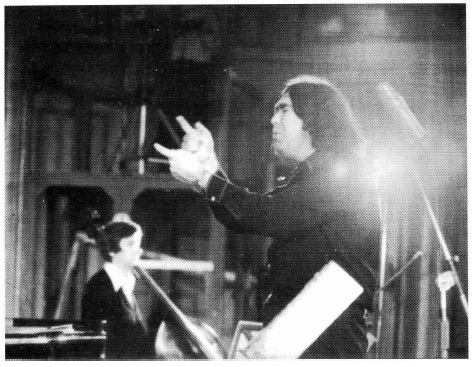
Coinciding nicely with the recent release of the collaborative effort between Neneh Cherry and Scandinavian trio The Thing, comes this reissue of a 1972 double album by step-/spiritual/musical father, the late Don Cherry, the daddy of anything goes fusion. Where other members of the 60s free jazz vanguard would look variously to Africa, India, Latin America and outer space for inspiration, Cherry, already a veteran of Ornette Coleman’s hugely revered and groundbreaking group, went everywhere at once. The sprawling Organic Music Society, recorded with an international cast of players in his adoptive home of Sweden, is the culmination of this approach. ‘Brazilian Ceremonial Hymn’ may be driven by wordless chants towards Amazonian mountains, but it’s the Indian tamburas that provide the bedrock for the leader’s rattling percussion and Naná Vasconcelos’s bouncing berimbau. Next, on ‘Elixir’, Cherry retreats to a cave to meditate with his Chinese ceramic xun flute only to be interrupted by galloping piano and drums that urge him to speak in tongues and crack out his trumpet before finally calming everyone down with a droning harmonium coda. The fever and ecstasy is only dulled when Cherry explicitly addresses the Society’s syncretic vision on the overly long two-part ‘Relatively Suite’, where he pays tribute to every belief and deity he can think of. There’s plenty of action in the second half though, where the group take on both Pharoah Sanders and Terry Riley compositions in the same extended ritual/jam. Styles slide alongside each other rather than collide, all propelled by Turkish drummer Okay Temliz’s cymbal heavy swing. And there’s still room for what’s next? anticipation – by the end Cherry has inducted a Youth Orchestra and a makeshift choir of elementary school teachers to the Society’s holy orgy. Spellbinding. (AB)
Golden Retriever – Occupied with the Unspoken (Thrill Jockey)
The electronics and clarinet duo of Jonathan Sielaff and Matt Carlson return with another otherworldly record. Four nine-minute pieces of carefully studied music that suggest the pair have found their mantra and are sticking with it. ‘Eudaimonia’ is a swirling but jagged spiral of glitch-ridden electronics that flow out into a repetitive gurgle of throbbing synth notes and crying riffs. Closing track ‘Winter Light’ has an ethereal bass clarinet cry that echoes to infinity, given all the space it needs, underneath which a small current of electronic sounds flutters, playing a definite second place to that treated, but always ‘natural’, sound. That’s what makes Golden Retriever such an intriguing listen – their ability to create a rich texture of music from the melding of organic and inorganic that could sound artificial in other hands, but in theirs it’s actually something wonderful. (RH)
High Aura’d – Sanguine Futures (Bathetic)
It’s becomingly increasingly difficult to write in any meaningful way about ambient releases, such is both the proliferation of music and by extension, the sheer amount of expended digital text. It’s not an exaggeration to say that some releases have as many purple reviews as there are physical copies available. All of which means, when a record of exceptional quality does arrive you find yourself reaching for higher superlatives or more abstruse adjectives to ecstatically describe the sonic phenomena as they unfold. What this situation does do is force you back to essentials: what, precisely, makes for a good ambient recording? And the answers are fairly simple: appreciation of atmosphere, tone, duration and architecture. And safe to say, High Aura’d (the recording alias of John Kolodij) has absolute mastery of all of these facets. Broadly put Sanguine Futures is elemental ambient music. Yet there is something more than just pretty evocation at work here: Kolodij has a granular approach to his compositions meaning each strata, each seam is carefully crafted, to the point where you can almost feel the bedrock and grasp at the clouds of vapour – these are compositions that invite a kind of habitation. On a track such as ‘Sleep Like the Dead’ there is a geological heft to the outer layers of the drone, and the heartbeat, when it comes, is bulbous and warm. ‘La Chasse-galerie’, is suitably wild, like its subject matter: a wild hunt, roaring high above the trees, peaking in a glorious crescendo, redolent of Yellow Swans at their most ecstatic. Thinking of other antecdents, I keep coming back to the Eno of On Land especially on the long eerie swamp-song of ‘Mercy Brown’ which has, at its heart, the story of an exhumation of a 2-month old corpse, a corpse whose heart still contained blood… Sanguine Futures is full of these kinds of layered readings, readings that double and intensify the already dense sonic material. Stunning stuff. (MP)
Isnaj Dui – Abstracts on Solitude (Hibernate)
Isnaj Dui is the latest recording project of Kate English who has been releasing music under one guise or another since 1995. Abstracts on Solitude is her first release for Hibernate. It’s an eerie, sensual album, full of the blooming low cadences of the bass flute, a seldom-recorded member of the flute family, often overlooked for the fact that in an orchestral situation it is easily drowned out. English uses the flute to create a kind of tremulous biosphere, inside which the subtly-effected electronics, treated dulcimers and thumb pianos creak and flit. The cover of the record acts as a kind of map for the overall sound of the album. At first glance, I saw both a landscape and an abstracted view of a female chest – the fact that it is neither of these, but a blurred close-up of a circuit board is instructive. For these are intimate creations that act like body maps: the breath of the flute, the strange synaptic clicks and whirs of the electronics, the drum-hollows of the dulcimer, the percussive thumb piano. That said, the composer always maintains a sense of that which lies beyond, particularly on the beautiful closing track ‘The Last Will Become A Darker Grey’ which has an almost Delius-like pastoral melancholy. (MP)
Old Apparatus – Derren EP (Sullen Tone)
This debut release on Sullen Tone, the label set up by the rather secretive analogue loving Old Apparatus, is four tracks of brilliantly evocative of music from London’s burgeoning electronic underground. Post-dubstep is what I want to call it, but only in that that dark and thick genre can be heard as the birthing pool for this heady mix. Short, sharp opener ‘Zimmer’ crackles with energy, blending fallen beats with dark synth tones that bleed effortless into standout track ‘Derren’. Fractured vocals moan over a distorted piano riff as a clipped beat slips effortlessly within. Could ‘Dealow’ be ‘West End Girls’ for the 21st century? The opening programmed beats suggest it could be. But the pitch-shifted vocals that follow, accompanied by a buzz of dirty analogue noise, suggests otherwise. The EP finishes with the dense and squashed tones of ‘Bodah’, the dark and brooding cousin that dallies with the tough underbelly of London and, of course, gets the final word. With further releases in the works, the future looks bright – or is that dimly lit? (RH)
Padang Food Tigers – Ready Country Nimbus (Bathetic)
Another strong release from Bathetic in what is proving to be quite a year for the North Carolina based label. Padang Food Tigers are Stephen Lewis and Spencer Grady, two members of Rameses III, who have released several gently beautiful long-form drone albums since their inception in the early ’00s. With Padang Food Tigers, the duo have boiled down their explorations to a spare essence, creating humid fragile miniatures from acoustic instruments and field recordings. The tracks, most no more than 2 or 2.30 mins long, are like captured moments or brief sketches of nature: a simple guitar pattern or lambent piano figure laid over distant church bells or stuttering chaffinch song. It brings to mind Bruce Langhorne’s mournful score for The Hired Hand and Scott Tuma’s rusty, elegiac folk explorations, and at times it does feel like a study in smuggled American primitivism. Should one care about spurious ‘authenticity’ when something sounds this natural and right? (MP)
Panopticon – Kentucky (Handmade Birds)
This isn’t nearly enough space to do justice to a record with such scope and heart, but there we are. Kentucky is ostensibly a black metal album, but it takes what are becoming tired tropes and gives them life, utilising the bursting drive of the blast beat and the icy nihilistic barrage for humanistic purposes, to give voice to the long dead. Austin Lunn (the sole member of Panopticon) has always dealt with difficult subjects (the last album, Social Disservices was about the appalling state of the youth care system in the States) but with Kentucky it’s like he’s found his perfect platform. It tells, via 3 long, more metal-based tracks and 5 shorter Appalachian folk and bluegrass workouts, the story of a state and its people’s relationship with the coal mining industry: the effect on the landscape, the horror of the daily work, the vile treatment of workers by the industry, the pitch battles between unions and the big corporations. It features, alongside the naked roar and violence of Lunn’s at times all out war approach to black metal, spoken word passages, field recordings (one particular heart-stopping moment has a 91 year old woman on a picket line declaring “I’m prepared to die, are you?”) and the simple uncanny presence of the volk in songs such as ‘Which Side Are You On’ written by Kentuckian Florence Reece in the wake of harrassment of her union founding husband by police and mining companies. If that sounds like the record might be a mess, then that’s not an unfair assessment – it’s a new juxtaposition of sounds and one that often jars. But it’s so strong on power and emotion that it builds its own deliberate structure around itself. By the 4th or 5th listen it makes perfect sense. A colossal achievement. (MP)
TVO – Red Night (Broken 60)
On his latest release for the increasingly essential Broken 60 tape-only label, Ruaridh Law, aka The Village Orchestra (TVO), has ditched his lush ambient meanderings and delved into the darker, twilight regions of his mind. Taking influence from William S Burroughs (the album is named after the first book in his final trilogy of novels Cities of the Red Night ) and the rougher and less perfect music of Pan Sonic or Porter Ricks. But it’s the Burroughs connection that is strongest. The sounds are delivered through a thick mucus, a static charge occasionally erupting and causing things to lurch and creep at irregular intervals (‘Ba’dan’). Meanwhile, the minimal techno vibe of ‘Waghdas’ is driven by a sinister beat that’s imitates the sound of the pulse locked in your head, the sound increasing to an almost unbearable level of pressure. The organic menace is replaced on ‘Yass-Waddah’ with a dirty metallic rhythm echoing the feeling of waking abruptly in the early hours – it’s no longer night but it’s not quite morning and the light is an alien glow of shifting shapes and colours that lack definition. But, as is often the case, it’s at these times that magic and mystery to combine to make the most interesting art, and Red Night is a fine example of this phenomenon. (RH)
Unrecognisable Now – Two Rooms (Kesh)
The project of Marcus Fischer and Matt Jones, Unrecognisable Now’s Two Rooms is something of a ‘live’ album. Recording in the basement of an aging office block in downtown Portland, Oregon, Fischer and Jones played their instruments at opposite ends of a long concrete room that was wired to with microphones to record the session. The four tracks here that make up the album are split mainly by changes in texture and tone, as the entire set was recorded as one. What’s so exceptional is the feeling of space (room?) at work here; the slow undulating drones of electro-acoustic noise drift in and out of your field of consciousness. Arrays of delicate and small refrains, from a piano or a stringed instrument, percolate under the white noise that spreads through the record. Two Rooms might be proof, if any were needed, that you can find beauty in the most obscure and unnatural of settings. (RH)