The second in our monthly round up of releases we haven’t covered in full but don’t want to slip away unmentioned. Reviews by Andrew Bowman, Rich Hughes, Scott McMillan and Matt Poacher.

Badun / Icarus – Flensburg EP (Not Applicable)
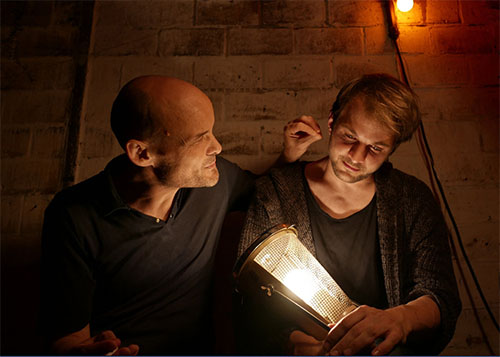
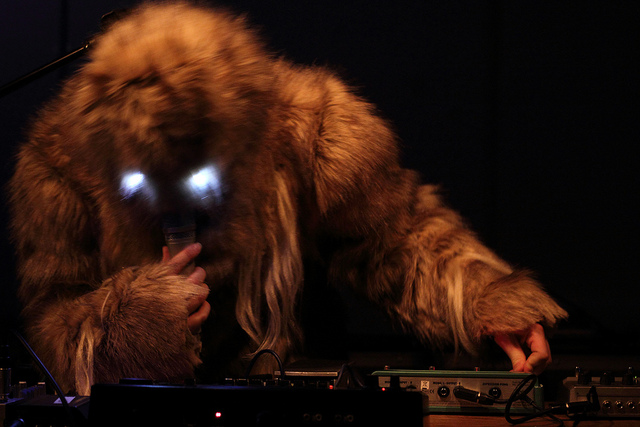
These two like-minded duos – Icarus from the UK, Badun from Denmark – first caught each others’ eyes at the aptly titled Elektronisk Jazzjuice Festival in Aarhus in 2005, both finding that they shared affinities with the worlds of hyperkinetic electronic music and abstract jazz. They’ve been going steady for a while since: they have shared the bill at numerous events, appeared on the same record label (Rump Recordings) and Badun also remixed a track from Icarus’s Sylt. They’ve finally consummated the relationship with a split EP: two tracks each, all constituted from elements produced at one joint recording session. The end result is sonically coherent, albeit in the most fragmented way possible. The Badun pieces “AKO” and “KTO”, which open and close the EP, are impossibly frenetic, rapid electronic rhythms emerging from a silvery mist of cut-up samples, the mood changing from dark and disorientating to the almost euphoric and, well, still pretty disorientating. Unusually, it is left to Icarus to restore a modicum of decency, producing the most wistful track here: the delightful “Sparkly Bear” is perhaps the most overtly jazz-influenced thing they have ever done. After its freeform intro full of metallic clanks and fizzing streaks of sound, a languid Rhodes twinkle emerges, perforated by a series of drum breaks before these structures are shattered once more, back into into a fine spray of particles. I wish I’d been there to see this relationship blossom before my eyes at Cafe Oto earlier this month. (SM)
Belong – Common Era (Kranky)
Belong’s journey to this point has, on the surface at least, been a strange one. The prescribed path in music tends to be from whole to fragment, from form to dissipation or bliss. Belong’s path has been the opposite of this: from October Language to Common Era they’ve moved from a crackling amorphousness to a (kind of) regular form. But the truth is, the logic is impeccable and could really be summed up by a couple of song titles from October Language: ‘Remove the Inside’ and ‘The Door Opens The Other Way’ – take away our urge for temporality and cohesiveness and all of their work is part of a larger whole, and you can spot the trajectory of Common Era in October Language and especially in the faded corridors of Colorloss Record. So where Colorloss featured actual song forms stripped of their guts and frayed to the point where they sounded more like overheard conversations, Common Era is slightly thicker and more driven, with tracks like ‘Keep Still’ acting like bridgeheads between the different soundworlds. Generally speaking, ‘driven’ might act as a keyword for the whole album: at heart it’s essentially a gauzy, murky, motorik-pop album, recalling elements of The Cure, even Can (rhythmically at least) and, especially, My Bloody Valentine. And when it works, on tracks like ‘Come See’ and ‘Perfect Life’ it’s affecting, pulsing pop music and the transition is something seamless; and yet there’s something oddly stultifying about the album, something I can’t quite get to grips with. The textures are always interesting, but two tracks especially, ‘A Walk’ and ‘Different Heart’ each feel like a very long five minutes. Belong remain an alluring prospect though, and come the release of their next album this will probably make a good deal more sense. (MP)
Dalglish – Benacah Drann Deachd (Highpoint Lowlife)
One of the final releases on the decade-old Highpoint Lowlife, Benacah Drann Deachd is Chris Douglas’s reflection on the period since the label released his first album of exploratory electronica under the Dalglish moniker. By the sounds of it, he’s had a pretty turbulent time too; the eleven tracks here, named for their date of creation – one from every year since 2001 – are sombre in tone and restless in their motion. Opening with mournful, wheezing chords, things build in intensity across the album as multiple twitchy (a-)rhythms wrestle each other with no clear victor. The nearest comparison here would be Autechre, (who first brought Douglas to Europe where he has lived since 2004), but the execution is even more fragile and febrile, the scraping metal ‘riff’ of ’30.12.2007′ is surrounded by quivering echoes and the overriding atmosphere is one of nervousness. Things calm down towards the end, as if the creator’s mind has worn itself out from constant battle, but the sadness stays. ’7.3.2009′ and ’6.8.2002 ‘ are fairly linear, melodies stick and order is achieved but fatigue has also taken hold: the former sounds like a ball game played out in super slow motion, while a balafon plays a lullaby in the background. The exhaustion is inevitable and also satisfying, this has been one almighty purge. I hope he feels better for it. (AB)
Hong Kong in the 60s – My Fantoms (Proper Songs)
You may, or may not, be surprised to learn that Hong Kong in the 60s are a British band ever-so-slightly obsessed with the synth-led pop of the 60s and 70s. Formed back in 2007, two of the trio went to school together only to become reacquainted when they both found themselves working as librarians at Oxford University. It’s this rather bookish and retro-fitted view that drives HKIT60s’ sound. Think of it as a rather more stripped back version of Stereolab, or a more pop-driven Broadcast. Melodies and gentle pop hooks are the order of the day. The lilting beauty of ‘Softly Sung’ could be seen as being rather twee were it not for the angelic synths, twinkling guitar riff and gentle drums that turn it into something rather more heartfelt and genuine. ‘Theme from King of Chinatown’ on the other hand is a cinematic and Eastern-tinged instrumental that revolves around some wind chimes and a morose electric piano which then becomes charred by a razor sharp slice of treated guitar. ‘Diaryland’ is the sound of Belle & Sebastian filtered through a bed of Portishead – journal entries over clip-clop beats and a thick slice of 60’s modular synth. With the current fashion 60s and 70s modular synths, it’d be easy to write of HKIT60s as a rip-off poseurs, but there’s an emotion in the songs that’s hard to fake. There’s no posturing or knowing glances to the audience here. This is thoroughly contemporary pop music filtered through a fantastic kaleidoscope of aural patterns. (RH)

Philip Marshall – Casse-tête (Tapeworm)
The sheer range of the Tapeworm’s interests continues to confound and delight in equal measures. One thing that has been reasonably consistent is their focus on individuals who, for one reason or another, aren’t exactly household names. Recent cassettes have included those from Peter Hope-Evans, once a member of 70s British blues band Medicine Head, as well as work from the workouts of the ultra-secretive drone duo Deceh. The name of Philip Marshall may be more familiar from his design work rather than his musical endeavours, but his new release is one of my favourite Tapeworm cassettes. In a way, it feels like the label in microcosm: with someone commissioning and arranging some very different sections into a beguiling whole. Andrew Poppy features with a couple of haunting solo pieces, before the tape is changed and we’re listening to someone else’s field recordings from a Parisian street, with accordions and street chatter – that too is soon ejected in favour of some deep church organ drone. And like the label itself, the strong curatorial hand ensures that it all works, the distinct movements somehow being knitted into a fascinating and evocative whole. (SM)

The Master Musicians Of Bukkake, Totem 3 (Important)
I’ve always had a problem with the MMOB: their name, which I can hardly bring myself to type, being amongst the worst in all of recorded music, managing to be childishly puerile, unfunny, and even slightly disrespectful all at once (fair play to them, it must have taken some effort to pull off such a hat trick). I probably wouldn’t have given Totem 3 a second glance if I hadn’t come across them playing at last year’s Supersonic Festival. While they clearly weren’t playing it entirely straight – the plumes of burning incense and all the robes seemed a little over the top – there was a clear logic to the way they were building links between the drones of black metal (they feature former members of Asva and Earth, after all), and the drones found in traditional Arabic and Indian musical forms (likewise, the Sun City Girls have been involved, and the performance I witnessed featured the oud player Khyam Allami). To my surprise, I really enjoyed the show. The following album, the trilogy-ending Totem 3, continues to build those deep drone connections, but they’ve also found new and more melodic links, such as the Tuareg-sounding song in “Prophecy Of The White Camel”, with churning guitar and soft handclaps, which sounds great in this context. Less so the John Carpenter synths of album closer “Failed Future”, although this sounds more like them working out a possible next direction. Let’s hope they find a new name while they are at it. (SM)
Shinji Masuko – Woven Music (Brah)
Shinji Masuko is the guitarist in legendary Japanese bands DMBQ and Boredoms, and this is his first solo record, a record that only saw the light of day after Kid Millions of Oneida heard rudimentary fractured versions of these two tracks and persuaded Masuko that they needed to be heard. And thank heavens he did, for ‘Woven Music for Blue Steppe’ and ‘Woven Music for Silver Ocean’ in line with their haiku-like titles and subjects, are miniature symphonies of managed ecstasy, tendrils of layered acoustic and electric guitars entwining and spiralling skyward into vaporous rapture. There is bombast here (Masuko’s tone and the way he plays with the edges of feedback is reminiscent of an Eno-tampered Robert Fripp, or even The Verve’s Nick McCabe if that doesn’t sound too blasphemous) but it’s skilfully managed and doesn’t tip into melodrama, instead the enmeshing of the layered guitars and the tight pitch and volume control are handled perfectly creating something warm and beatific. (MP)
Maybeshewill – I Was Here for a Moment, Then I Was Gone (Function Records)
As post-rock becomes a behemoth of a genre and covers a multitude of sins, it’s perhaps reassuring that there are bands out there trying to do something different in its name. Leeds’ Maybeshewill are onto their third LP with I Was Here For a Moment, Then I Was Gone. Their debut EP burst my eardrums with its driving rhythms and spiraling guitars. It was a fresh, raw treat in a genre that had become a little safe and tired. On this LP, the band have decided to start from scratch again, forgetting all their previous work. They have, however, taken the opportunity to work in a studio – their previous albums were all bedroom-based works. What this means is that IWHFAMTIWG is as fresh sounding and as urgent as their debut. Guitars and pianos entwine, drum beats drive and charged synthesizer refrains barrage the senses. There’s a wonderful widescreen sound that seems out of place for a band doing everything themselves. At moments beautifully emotional, like the piano refrain, strings and twinkling percussion on ‘Accolades’, or as rough and ready as the twisting riffs and soaring strings of ‘An End to Camaraderie’ which reminds me of Russian Circles as their most accessible. OK, so ‘Critical Distance’ could soundtrack a Match of the Day montage, and there are a couple of moments where you wish they would let-rip more often, but on the whole this is a vastly enjoyable charge through a genre that’s desperately in need of rejuvenating. And where better to look than the North for salvation. (RH)

Joe McPhee and Chris Corsano – Under A Double Moon (Roaratorio)
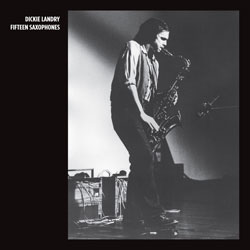
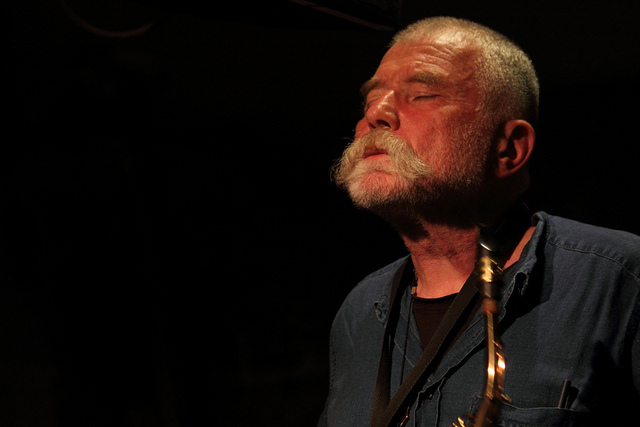
One of the – well, probably the only – disappointment about the recent Peter Brotzmann Tentet show I caught at Cafe Oto was that I didn’t get the chance to see Joe McPhee in full flight, thanks to his decision to restrict himself to pocket trumpet. At his best he is an absolute titan on the saxophone(s) – as demonstrated on his wonderful pair of LPs for the Roaratorio label entitled simply “Alto” and “Soprano”, long-delayed follow-ups to his 1976 HatHUT album entitled, obviously, “Tenor”. This new LP for Roarotorio documents a 2010 performance in the city of Paris with another beast of his respective instrument, the hyperactive American drummer Chris Corsano, who has by now played with everyone from Keiji Haino to Bjork. Under A Double Moon is as much of a blast at times as their respective pedigrees would lead you to expect, although it does contain a considerable degree of subtlety: tiny stick click from Corsano, what sounds like a whistling solo from McPhee. As ever, it is the interaction on which these combinations will be judged, and both show unearthly ability to respond inventively to the textures of the other: cymbal scrape against sax whine, oscillating rhythms underpinning trumpet flutter. Even better, they also know when best to leave the other accompanied: the beautifully lyrical sax solo which opens ‘New Voices’ sounds like a freshly minted standard. Truly luminous. (SM)

Part Wild Horses Mane On Both Sides – Low Fired Clay Escape (Carnivals)
This new album by PWHMOBS, as the Minimal format demands I call them henceforth, is even more disorientating than usual: discrepancies between the stated number of tracks per side and the actual number leaving me entirely unsure as to which is side A and side B, and what any of the tracks are actually called. And things were tough enough already: for despite their earthy roots, PWHMOBS – the duo of Kelly Jones and Pascal Nichols – still sound quite like nothing on this planet. Their mixture of improv percussion, recordings of nature, junkyard gamelan, electronics, hand drums, throat singing, and soaring bird-like flute draw from so many different styles and cultures that is difficult to put them in any sort of theoretical, geographical or temporal framework. What is this music? And what makes it so utterly entrancing? Perhaps it is that sense of it being so unshackled from context, so free to circle upwards on thermals of its own making, Jones’s flute tracing patterns in the sky, propelled by the beating wings of Nichols’s drum patterns. Whatever, Low Fired Clay Escape is a great document of an increasingly essential band. (SM)
Andy Stott – Passed Me By (Modern Love)
Mastered at Berlin’s famous Dubpates & Mastering, this seven-track double pack from British producer Andy Stott is ostensibly of the minimal/dub techno tradition. However, while the sound is exquisitely designed with a flawless sense of space and dynamics, there’s no adherence to readymade templates here. Though it does share the much-aped inside-outness of Basic Channel or GAS, the references, the smothered elements, are from different places altogether. ‘New Ground’ is disco from a distance, a single female voice occasionally released above the frankly abominable bass weight to intone, siren-like, “There’s something about you”. Four-to-the-floor pulse aside ‘North to South’ is more like an excavation of 80s drum machine hip-hop, scratchy stabs crying out across the surface and ricocheting all over the place. ‘Intermittent’ meanwhile, mangles some machine soul/boogie, making its chords lurch violently while keep them on a leash until the very last moment. Just past the halfway mark, ‘Dark Details’ might be an inversion of UK funky and/or juke, but by this point in proceedings things are getting too murky to tell exactly, you just have to submit to what ultimately amounts to a confident, singular reimagining of dancefloor music and its many divergent strains. Excellent. (AB)

Ben Vida / Keith Fullerton Whitman – AggregatePulseRipper (Damaged IIII) / 080114 (Amish)
It seems that the live modular synthesizer-based phase of the Keith Fullerton Whitman discography may be reaching its end point. He has described the “Generator” project as one which “cleared the air and lent much to my mental stability”. Which is quite something given the inherent unpredictability of the form, the thrilling sense when listening to these of everything being in the red, on the point of collapse. There are, however, still a few more of these releases to emerge though, and we should savour them wherever they pitch up. This, the third in Amish’s Required Wreckers series, is the third in another series: that of KFW split LPs, after the earlier pairings with Carlos Giffoni and Mike Shiflet. This time it is his sometime Kranky labelmate Ben Vida (of Birdshow and Town & Country) who has the big ask, but his twelve minutes of analogue/digital noise – the suitably shoutily-titled “AGGREGATEPULSERIPPER (DAMAGED III)” – are no let-down, combining sections of squawking tunefulness with harsh pulsations which swirl into staccato rhythms. The Whitman side (a live concert recording) starts with some strange scraping noises, as if he is physically wrestling sounds from the machine. It soon spits into life, the chatter becoming enveloped in a magnificent cavalcade of sound, clicks giving way to the heady melodic rush of what you’d probably consider to be an improvised solo, if the whole thing wasn’t essentially an improvised solo anyway. Wherever Whitman goes next (and this guitar/Max-MSP piece on Soundcloud may or may not be some sort of clue), he’ll do well to top the likes of this. (SM)

Various Artists – Brass Pins and Match Heads: International 78s Vol. 2 (Mississippi)
This new release from the ever-reliable Mississippi records imprint is a follow up to the String Of Pearls compilation which was compiled in 2009 by record store owner and drone musician Ian Nagoski, showcasing his collection of 78rpm records from around the globe. While these could easily have become an exercise limited by either the paucity of source material, or by a desire to prize obscurity over objective quality, both are in fact surprisingly consistent: there isn’t a duff track on here, and some are downright jaw-dropping. Along with the more familiar names of Django Reinhardt and Jelly Roll Morton (particularly choice cuts, both), this time round his selections include Omaha flute music, Persian tahrir, Portuguese fado, Macedonian folk song, Spanish classical guitar, Rajastani goomar, and Swiss yodelling. Yes, yodelling. In fact, Jodlerklub Thun’s “Alpufzug” isn’t just the best thing on here, it is one of the most beautiful pieces of music I’ve heard in a long time. As the the sounds of cattle herding merge with the glorious, soaring vocals of Jacob Ummel, it sounds like we are listening to a man completely in thrall to the beauty of nature and the purity of tradition. Like Ummel’s contribution, Nagoski’s curation of this compilation is an act of love, an unshakeable commitment to some age-old values which transcend borders. (SM)
Whirl – Distressor EP (The Sounds of Sweet Nothing)
Shoegaze has become somewhat en vogue again of late. Those shimmering guitars, hushed vocals and wall of sound production have been used to hide myriad failings as the sound of wagons being jumped on echoes through the land. However, the debut EP from Californian six-piece Whirl sounds remarkably authentic and fresh. This is mainly due to its DIY-aesthetic and the fact that everything was recorded live; no overdubs or fancy studio trickery here. The EP title accurately reflects the effect they have on your speakers. It’ll take a keen ear to pick out Whirl’s words of wisdom, so dense is the sound, but because of this sound the record becomes all-absorbing, covering you in a thick and gummy coating. ‘Ghost’ might be the perfect realisation of their sound: a crackle of static in the gloom, drilled through by a barrage of guitars while angelic vocal harmonies float above. The swirling drone of ‘Sandy’ prowls, and a crying female vocal is the only thing that can break through its compact and concentrated base. ‘Meaningless’ however is a throw-away pop hit, two minutes of tearaway and joyful abandon, tucked away to catch you by surprise. This peculiar and particular audio acutely reflects the sound of the sun-drenched West Coast as filtered through an obvious love of the Cocteau Twins, Ride and, of course, MBV. But this is their vision, their mix of clashing styles, and the Destressor EP goes beyond mere pastiche and magpie cleverness. This is the sound of modernist shoegaze, freshly squeezed. (RH)
Related posts:
- Liminal Minimals – April 2011 An ongoing but intermittent series, wherein we try and cover a host of releases we simply haven't been able to review in full but don't want to slip away unmentioned....